The Bialetti Moka Express is the classic stovetop coffee maker that’s been sitting on Italian kitchen counters since 1933. It’s not an espresso machine, and it won’t pull a true crema shot. But it makes strong, rich coffee with almost no fuss, and that’s exactly why it’s stayed popular for nearly a century.
Quick verdict: If you want bold, concentrated coffee without buying a full espresso setup, the Bialetti Moka Express delivers. It’s cheap, simple, and built to last for years on a gas or electric stovetop.
🔬 Evaluation Summary
Our evaluation analyzes verified manufacturer specifications, build durability, temperature/grind consistency, and real-world buyer feedback.
What Is the Bialetti Moka Express?
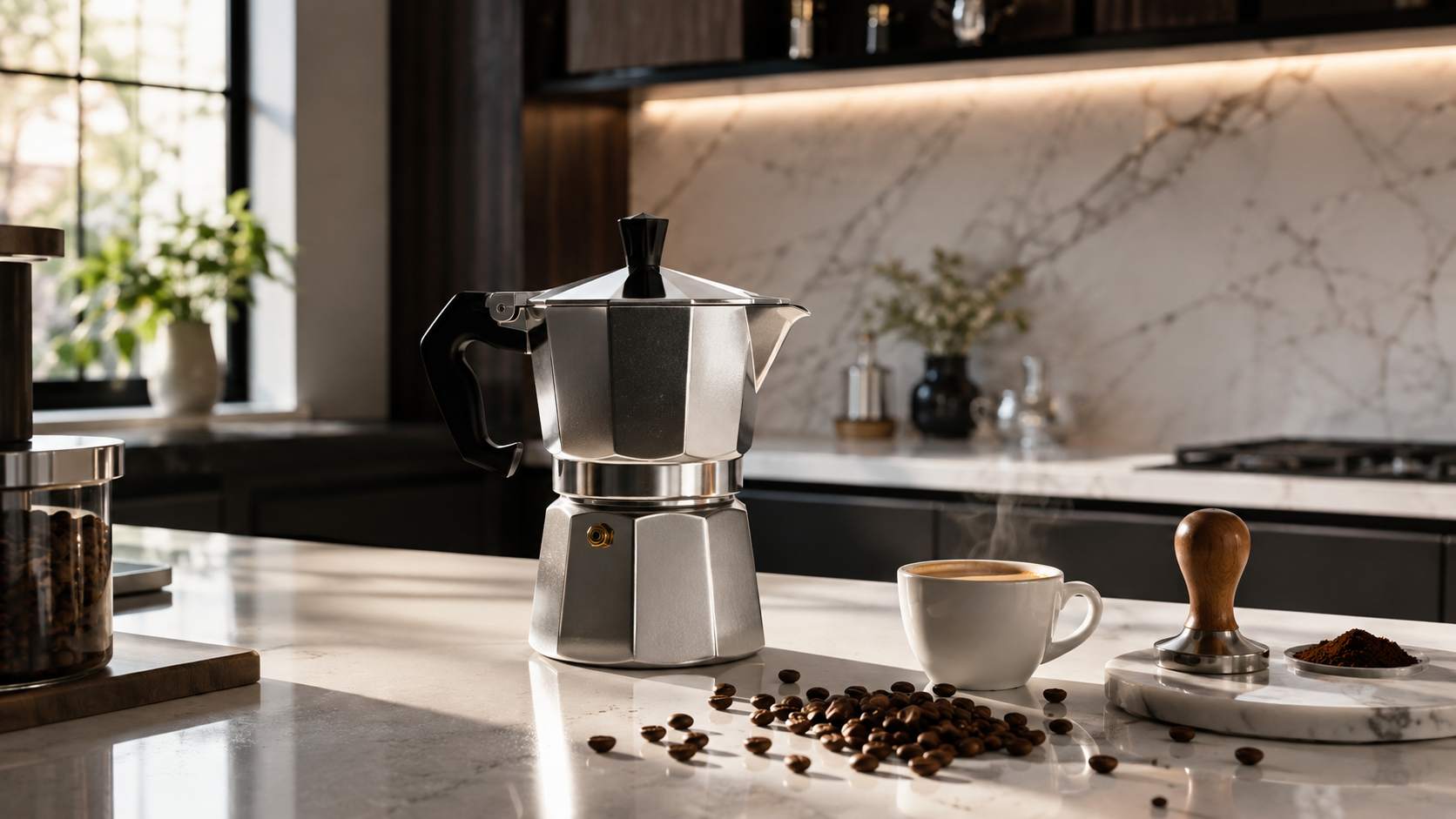
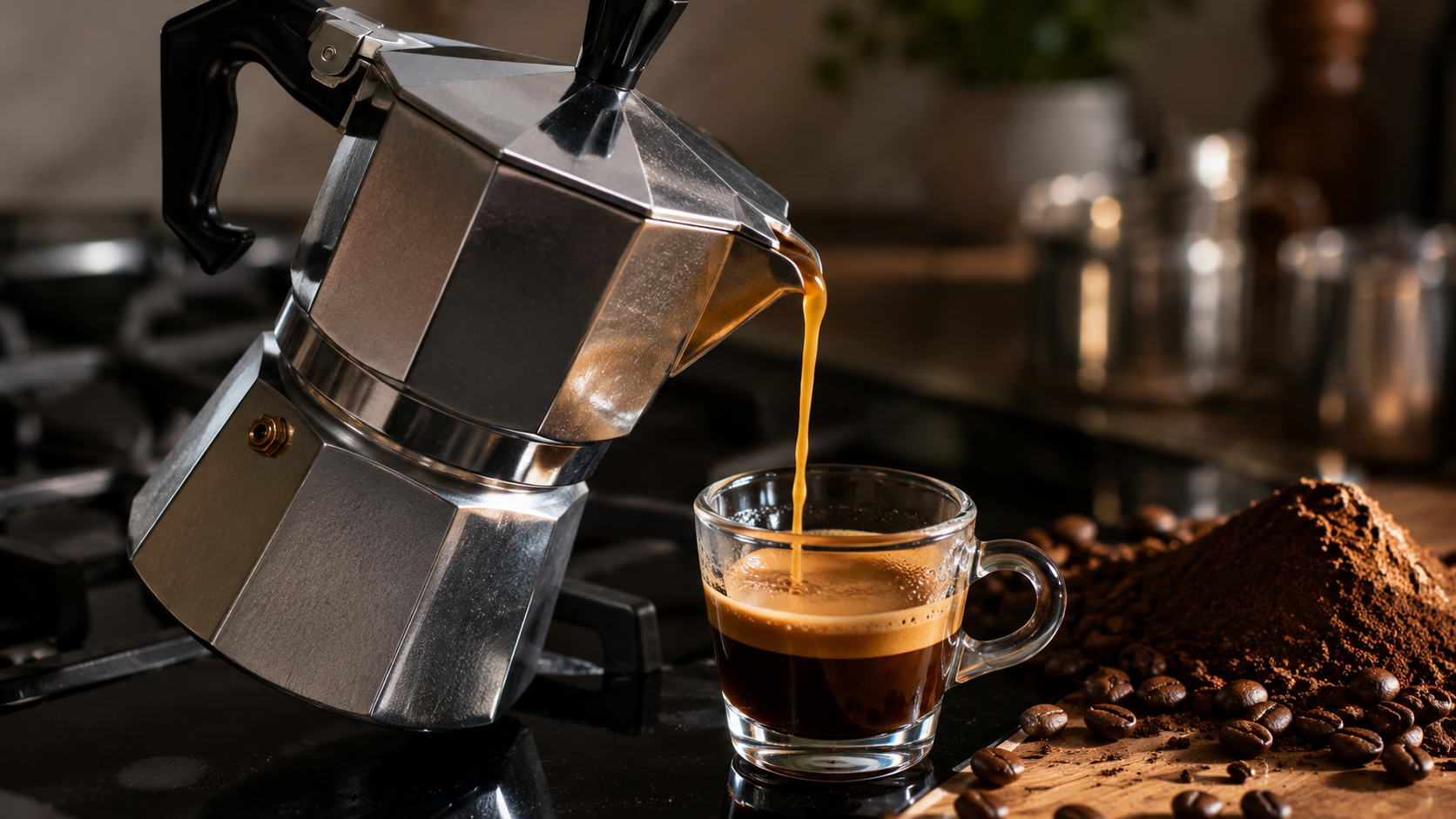
The Bialetti Moka Express is a three-chamber stovetop pot. Water sits in the bottom chamber. Coffee grounds go in a funnel basket above it. Steam pressure pushes hot water up through the grounds and into the top chamber.
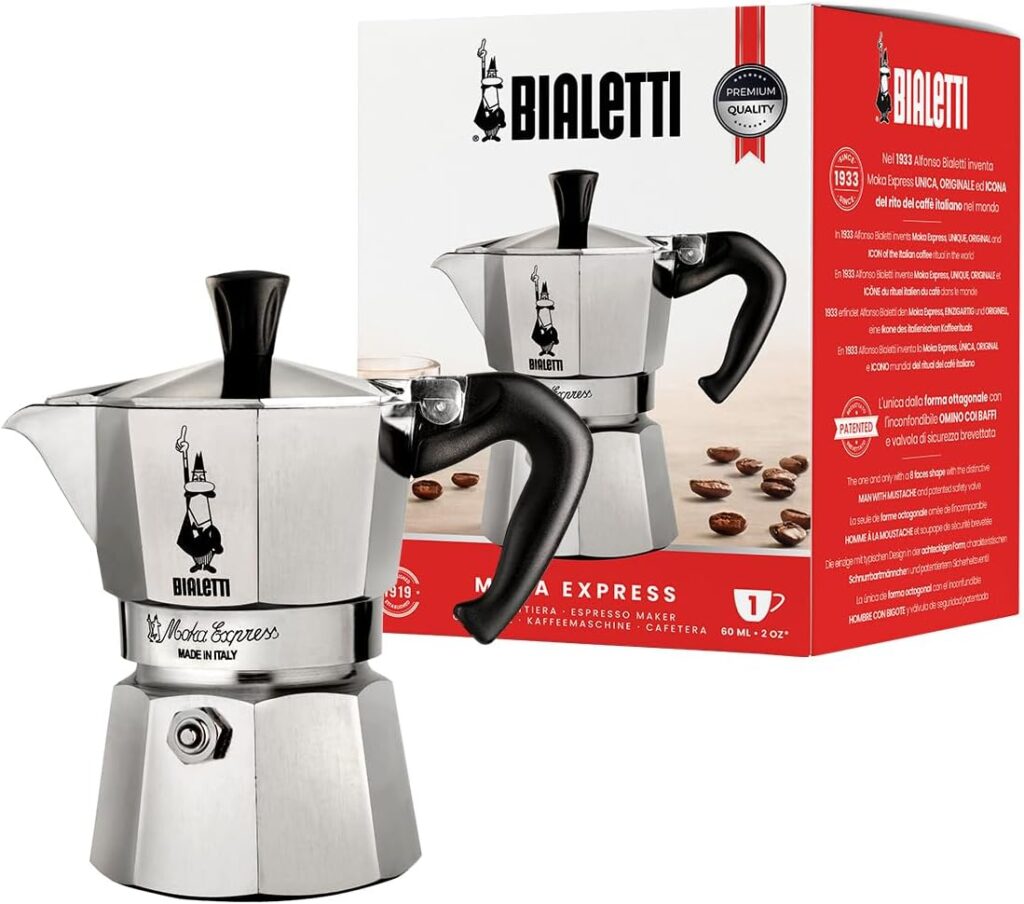
This model makes a 1-cup size, about 2 ounces (60 ml) of finished coffee. It’s made from polished aluminium with Bialetti’s signature octagonal shape and the classic little mustachioed logo on the handle.
There’s no plug, no PID control, and no digital display. It’s a simple, mechanical design that works on gas, electric coil, or ceramic stovetops (not induction, unless you use an adapter plate).
Key Specs and Practical Build
The body is cast aluminium, which heats quickly and evenly. That matters because moka brewing depends on steady heat, not blasted heat, to avoid a burnt or bitter taste.
The handle and knob are heat-resistant black plastic, so you can grip the pot safely once it’s hot. A small safety valve on the side releases pressure if it builds up too high, which is a nice touch for peace of mind.
Inside, a metal filter plate sits between the water chamber and the funnel basket. It holds a paper or reusable seal (gasket) that keeps the pressure contained during brewing.
Brewing Performance and Daily Workflow
Using the Moka Express is simple, but it does take a little practice. Fill the bottom chamber with water up to the safety valve line. Fill the funnel basket with finely ground coffee, and level it off without pressing it down.
Screw the top and bottom together, place it on medium-low heat, and wait. It usually takes 4 to 6 minutes for coffee to start bubbling up into the top chamber.
Grind size matters a lot here. Too fine, and the water can’t push through, which risks a stuck brew or burnt coffee. Too coarse, and you get a weak, watery cup. A grind between drip and espresso usually works best.
The result is strong, full-bodied coffee, closer to espresso strength than drip coffee. It’s not true crema extraction like you’d get from a pump espresso machine, but it’s rich enough to drink straight or turn into a latte.
One review team called it the original moka pot design that’s still the gold standard for stovetop coffee. Another noted it does take practice and patience to get the timing and grind just right, per their hands-on testing.
Standout Strengths and Realistic Trade-offs
The biggest strength is simplicity. There’s nothing to program, no water reservoir to descale with special cartridges, and no electronics to fail. It’s also inexpensive compared to any electric espresso machine.
Build quality is another strong point. The aluminium body and screw-tight design feel solid, and Bialetti pots often last a decade or more with basic care.
The main trade-off is maintenance. The pot isn’t dishwasher safe, and you shouldn’t scrub it with soap, since that can strip the seasoning that builds up inside over time. You also can’t walk away while it brews, since it needs to come off the heat right when it finishes.
It also makes just one style of coffee. There’s no steam wand for milk foam, and no way to adjust pressure like on a real espresso machine. If you want lattes or cappuccinos, you’ll need a separate milk frother.
Comparison and Alternatives
Here’s how the Moka Express stacks up against other common home coffee options.
| Feature | Bialetti Moka Express | Pump Espresso Machine | Drip Coffee Maker |
|---|---|---|---|
| Price range | Low | Medium to high | Low to medium |
| Crema | No true crema | Yes, with proper tamping | No |
| Milk frothing | Not included | Often included (steam wand) | Not included |
| Learning curve | Moderate | Moderate to high | Low |
| Maintenance | Hand wash, no dishwasher | Regular descaling | Easy rinse |
| Best for | Strong, simple daily coffee | Espresso-based drinks | Large batch coffee |
If you’re set on real espresso with crema and steamed milk, check out our Best Espresso Machines for Home Baristas guide instead. But if bold, no-frills stovetop coffee is the goal, the Moka Express is hard to beat.
Who Should Buy the Bialetti Moka Express?
This pot is a great fit for anyone who wants strong coffee without buying an electric machine. It’s also ideal for small kitchens, campers, or anyone who likes a hands-on brewing ritual.
Skip it if you want milk-based drinks, a hands-off brewing process, or dishwasher-safe cleanup. In that case, a pump espresso machine or a drip maker will suit your routine better.
Whatever machine you choose, using filtered water helps protect it from mineral buildup over time. Our guide to water filtration for coffee gear covers good options.
Practical FAQ
Is the Bialetti Moka Express real espresso?
Not technically. It brews strong, concentrated coffee using steam pressure, but it doesn’t reach the pressure levels of a pump espresso machine, so it won’t produce true crema.
Can I use the Bialetti Moka Express on an induction stove?
Not directly. The standard aluminium Moka Express needs a separate induction adapter plate, since aluminium alone won’t heat on induction burners.
How do I clean the Bialetti Moka Express?
Rinse it with warm water only, no soap, and let it air dry. It’s not dishwasher safe, and soap can strip the natural coating that builds up inside the pot.
Final Verdict
The Bialetti Moka Express earns its reputation as a kitchen classic. It’s simple, durable, and makes genuinely strong coffee for a fraction of the cost of an espresso machine.
It won’t replace a full espresso setup with crema and milk foam. But for daily stovetop coffee, few products match its reliability and old-school charm. Rating: 4.5 out of 5.