
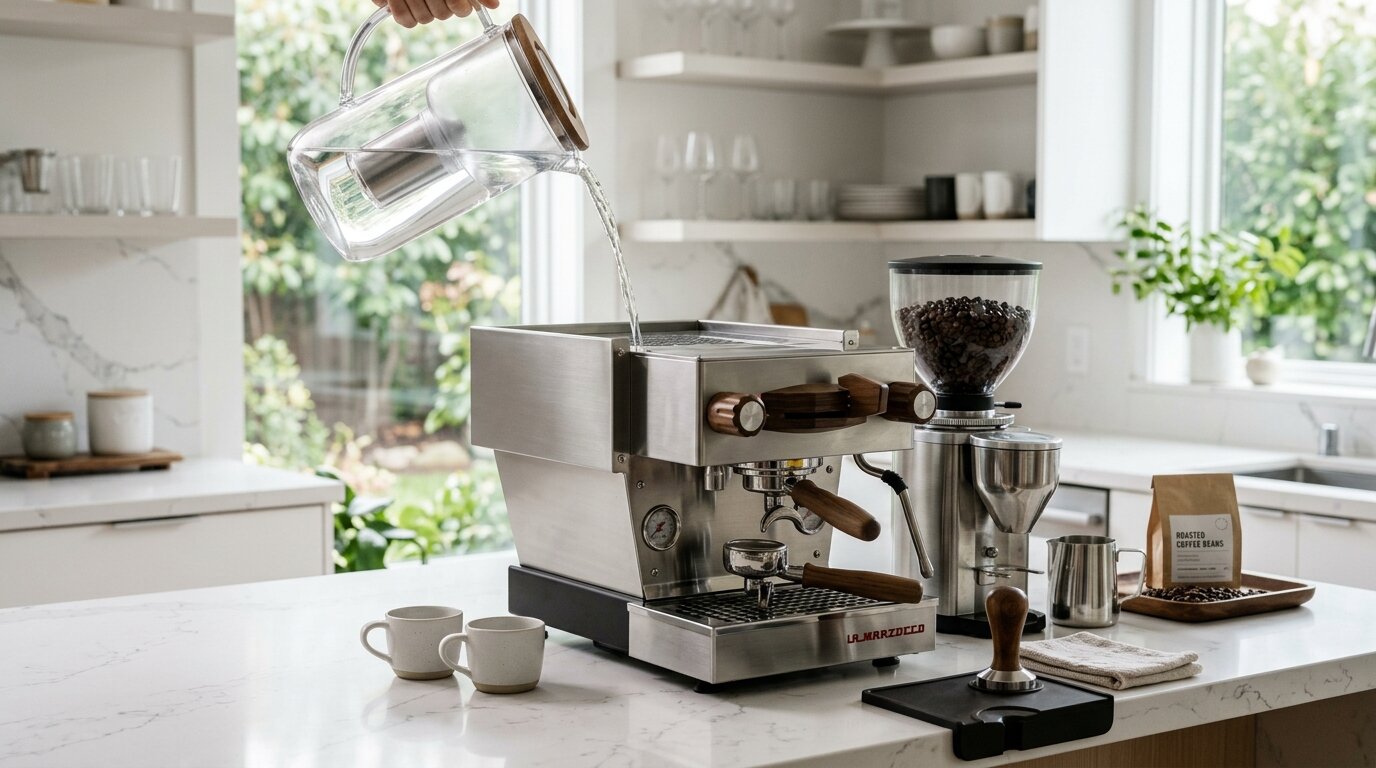
Finding the best water filtration system for coffee is the single most important upgrade you can make for cup clarity, balanced sweetness, and boiler longevity. Because water makes up over 98% of drip coffee and roughly 90% of an espresso shot, brewing with untreated tap water or the wrong filter leaves your coffee tasting flat or bitter—while silently destroying your espresso machine’s heating elements with limescale.
☕ Quick Summary & Key Takeaways
- The Problem: Hard tap water deposits calcium carbonate, causing 90% of espresso machine repairs. Stripping all minerals with distilled water ruins flavor and corrodes internal metals.
- The Target: Aim for a Total Dissolved Solids (TDS) range of 75–150 ppm with balanced calcium and magnesium for optimal extraction.
- Top Choice: A mineral filter pitcher for pour-over, an in-tank softening pouch for reservoir machines, or a remineralizing Reverse Osmosis (RO) system for plumbed setups.
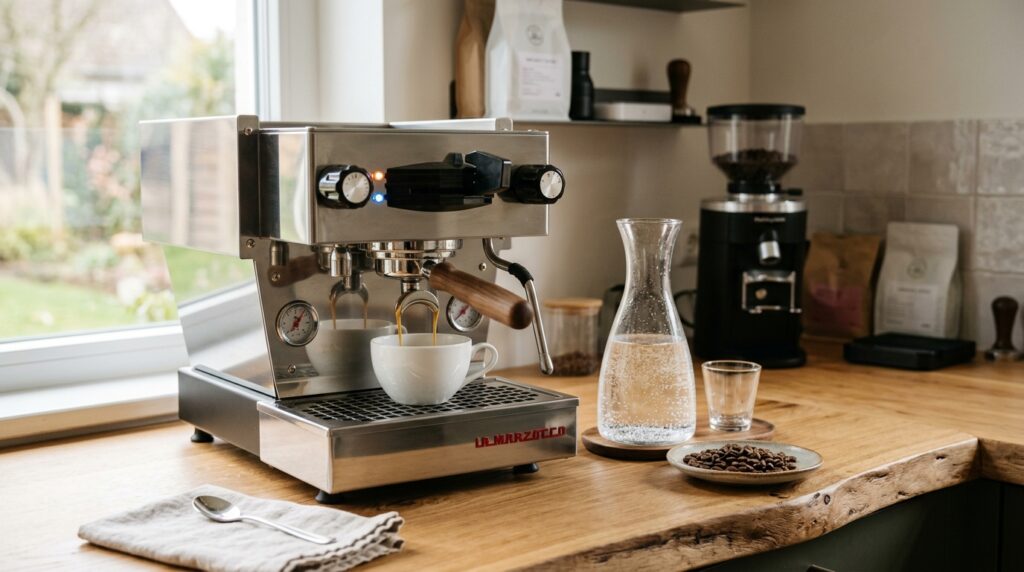
Why You Need the Best Water Filtration System for Coffee
Most home baristas invest heavily in grinders and specialty beans, yet overlook tap water quality. Municipal tap water carries disinfectants like chlorine alongside dissolved minerals like calcium and bicarbonates. According to USGS water hardness guidelines, water with high calcium content rapidly produces mineral crusting when heated.
Inside an espresso boiler or thermoblock, dissolved calcium bonds with bicarbonate ions to form solid limescale. Over time, scale coats temperature sensors and restricts water flow. Choosing the best water filtration system for coffee prevents this damage while preserving the magnesium ions required to extract bright, aromatic coffee compounds.
Best Water Filtration System for Coffee: The 4 Top Methods
1. Best Filtered Water Pitcher for Coffee & Manual Brewing
Specialized water filter pitchers are the most convenient starting point for pour-over brewers and reservoir-fed machines. Unlike basic kitchen pitchers that only filter chlorine, coffee-specific pitchers use ion-exchange resin to reduce temporary hardness while introducing magnesium to enhance fruity and floral notes in our home barista setup guides.
2. Best Water Softener for Espresso Machine Reservoirs (In-Tank Pouches)
For reservoir machines like the Gaggia Classic, Rancilio Silvia, or Breville series, in-tank softening pouches provide passive protection. These resin pouches sit inside the tank and exchange calcium ions for sodium ions, providing a simple best water filtration system for coffee machines without requiring any plumbing.
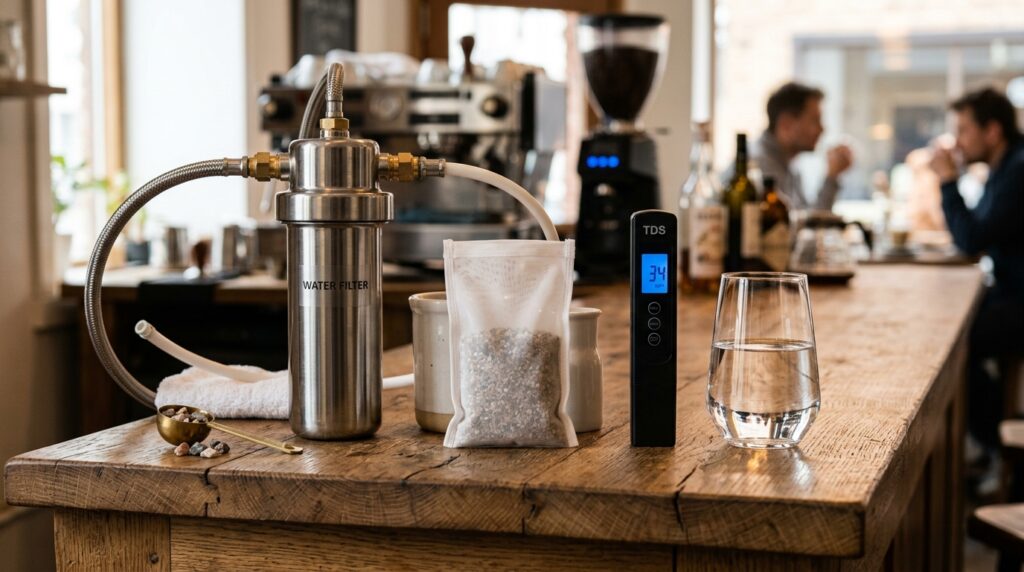
3. Inline Carbon & Ion-Exchange Systems (For Plumbed Machines)
When connecting direct-plumbed prosumer dual-boiler espresso machines, an under-sink inline cartridge is essential. These systems combine multi-stage carbon block filtration with adjustable bypass blending valves, making it the best water filtration system for coffee setups connected directly to a water line.
4. Reverse Osmosis (RO) with Remineralization (The Gold Standard)
In hard water regions (TDS over 250 ppm), Reverse Osmosis paired with a remineralization cartridge is the best water filtration system for coffee. The RO membrane strips all contaminants, while the remineralization stage adds back precise levels of calcium and magnesium for optimal extraction.
Comparing Each Best Water Filtration System for Coffee
| Filtration System | Limescale Protection | Flavor Extraction | Installation Effort | Best Suited For |
|---|---|---|---|---|
| Mineral Filter Pitcher | Moderate | Very High | Zero (Countertop) | Pour-over & Reservoir machines |
| In-Tank Softener Pouch | High | Neutral | Drop into reservoir | Vibration pump home espresso |
| Under-Sink Inline System | High (Adjustable) | High | Moderate DIY plumbing | Direct-plumbed dual-boilers |
| Remineralizing RO System | Maximum (100%) | Maximum | Under-sink installation | Hard water areas & enthusiasts |
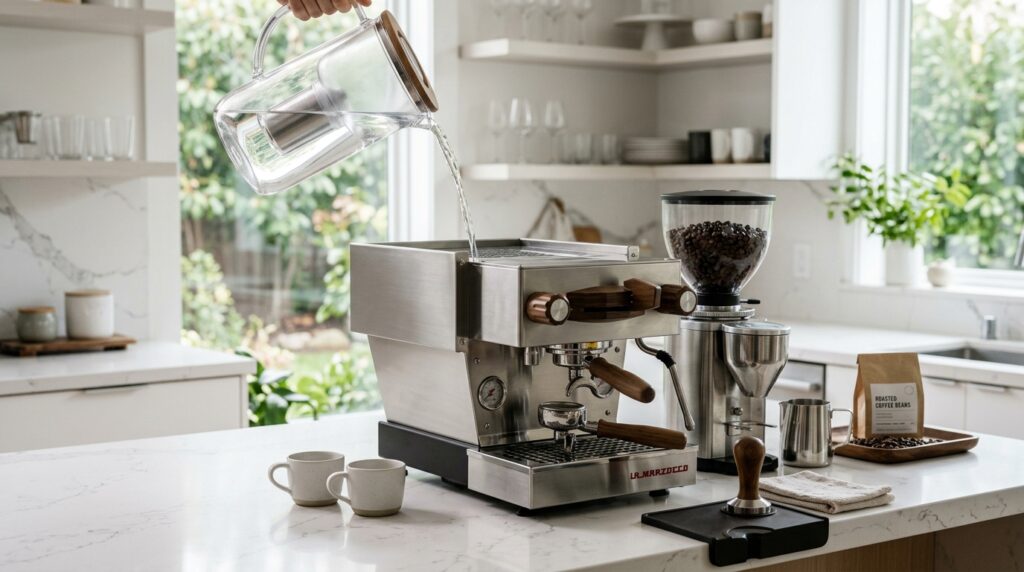
How to Select Your Ideal Filtration Setup
Selecting the best water filtration system for coffee depends on your brewing routine and plumbing preferences:
- Manual Pour-Over & Drip: Use a specialized coffee water pitcher or remineralized distilled water.
- Reservoir Espresso Machines: Combine a filter pitcher with an in-tank softening pouch for complete protection.
- Direct-Plumbed Espresso Machines: Install an under-sink inline filter or a remineralizing Reverse Osmosis unit.
Frequently Asked Questions
Can I use a standard Brita filter for my espresso machine?
Standard activated carbon filters remove chlorine, taste, and odor, but they do not soften water or eliminate calcium hardness. In hard water areas, scale will still build up rapidly inside your boiler if you rely solely on standard carbon pitchers.
What is the ideal TDS for brewing espresso?
The Specialty Coffee Association recommends a target Total Dissolved Solids (TDS) level of 150 ppm (acceptable range: 75–250 ppm), with total hardness of 50–175 ppm CaCO3 and total alkalinity near 40 ppm CaCO3.
How often should in-tank water softener pouches be replaced?
Most in-tank resin pouches last between 2 and 3 months (or approximately 50 to 100 liters of water throughput), depending on your tap water’s starting hardness.
Will water filtration completely eliminate the need for descaling?
Using properly treated water reduces limescale accumulation by up to 95%, allowing you to avoid harsh chemical descaling cycles that wear down boiler seals.
Final Verdict on the Best Water Filtration System for Coffee
Investing in the best water filtration system for coffee is the smartest preventive step for any coffee enthusiast. For most home baristas using reservoir machines, pairing a coffee mineral pitcher with an in-tank softening pouch offers the ideal balance of scale prevention and full-bodied espresso extraction. If your machine is direct-plumbed, a dedicated under-sink reverse osmosis system with remineralization ensures lifetime boiler protection and café-grade extraction.


